How to keep a toddler busy on a plane
How to keep a toddler busy on a plane
 Brittany Hulme, paediatric occupational therapist, Perth
·
October 2026
Brittany Hulme, paediatric occupational therapist, Perth
·
October 2026
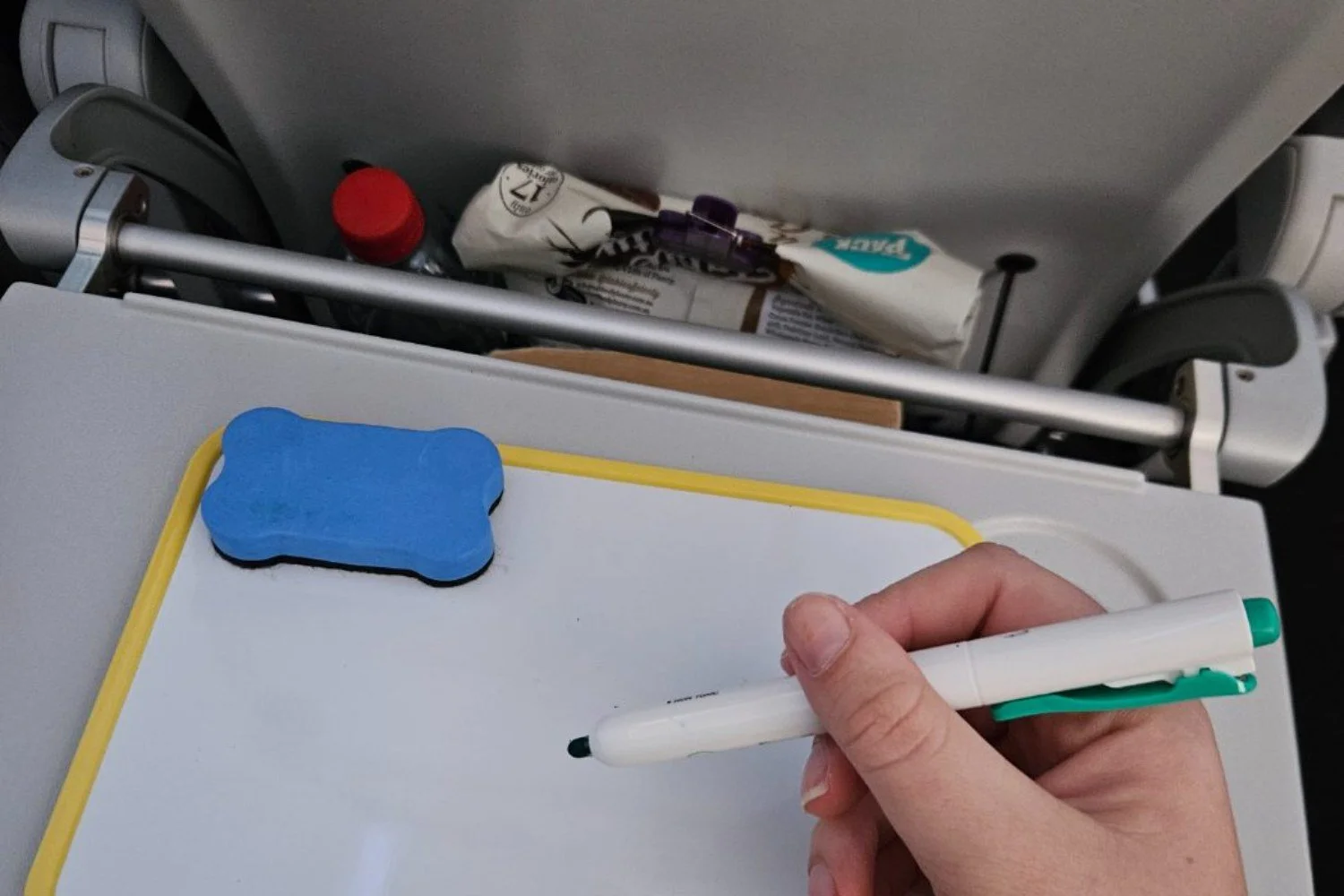
From Perth, a short flight is four hours. Sydney is closer to five. Bali is three and a half before you even count the wait at the gate. That is a long time to ask a three year old to sit in one seat.
Maybe your child hasn't flown before. Maybe the last flight was a hard one, or your child is autistic or has ADHD and new places take more out of them. If you're a bit worried about how they'll go, there's a lot you can do before you board.
I'll tell you exactly what to pack and when to hand it over, so that's one less decision on your plate. Let's face it, you've probably got a million other things to think about before you even get to the airport.
I'm a paediatric OT, and keeping kids engaged is literally my job. I've worked with hundreds of kids over nearly nine years. What I've learnt is that the toy matters less than how you use it, and how many different games you can get out of one thing. I've also spent more than a year designing my travel kit: talking to parents, trialling activities with kids out and about in cafes and restaurants, and working out what's travel friendly and what's just a hassle. Whether you buy a kit or put your own together, here's what I'd do.
Plan ahead, even a little
If your child finds flying hard, you haven't done anything wrong. But if I had to pick one thing that makes the biggest difference, it's planning ahead, so you're not going in blind and hoping for the best.
Think about your child before you pack. When do they usually nap? When do they get hungry? A plane is a new place, with new noises and lots of people, so they might be more stressed than usual. They'll probably get bored at some point, and they'll want to move. If you've thought about those things before you get on, you've given yourselves the best chance of a good flight.
How long can a 3 to 6 year old focus?
Not as long as a flight. A rough rule of thumb is a few minutes of focus for each year of age, up to about five minutes a year. That puts a four year old at up to about 20 minutes on something they really love, like a good story. It's a guide only, and it shifts a lot with how tired, hungry or interested they are.
A guide only. Tired, hungry or not interested, and it'll be shorter.
The research points the same way. Focused attention during play grows steadily between ages one and five (Ruff and Lawson, 1990). In a 2025 study of 93 three year olds, children stayed with a toy for about four minutes on average when they picked it themselves, and about two minutes when an adult chose it and handed it over.
So plan for focus to run out, often. Have several activities ready to rotate, so when one stops working you can bring out the next and keep them going. Where you can, let them choose from what's on offer.
Activities that can be used lots of different ways help too. A whiteboard can be drawing, then noughts and crosses, then a road for a toy car. You get more play out of fewer things, which matters when all of it has to fit under the seat.
Three rules for handing things over
How you hand things over matters as much as what's in the bag.
Variety of job
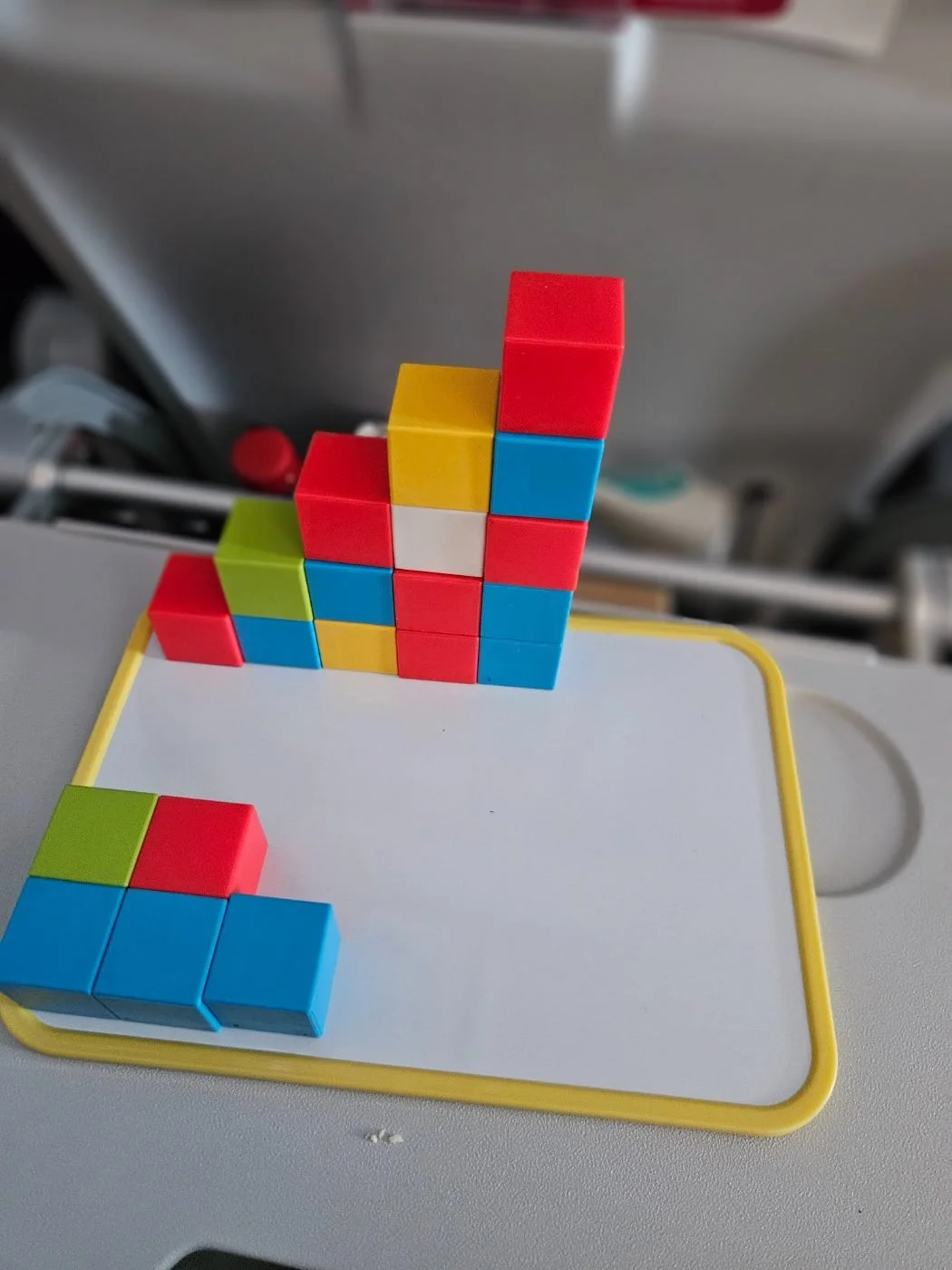
Drawing, then building, then finding things, then sticking. When every activity is a version of the same thing (five colouring books), they lose interest in all of them at once.
One at a time
Hand over one activity and put the rest away. A tray table covered in options tends to end with everything on the floor and nothing played with.
Pieces that stay put
Anything that rolls ends up three rows back. Pick things that stick, clip, zip or hang.
Plan the flight in chunks
A four hour flight is really five short stretches. Plan an activity for each.
-
1
The gate and boarding
Save your new things. Use the airport: watch the planes, find the tail colours, walk the length of the terminal.
-
2
Take-off
A drink or a snack helps with ear pressure. Keep a window game ready: count the trucks, spot the clouds.
-
3
The first hour
Bring out your best activity while patience is highest. Drawing and building usually last longest here.
-
4
The meal and the long middle
Rotate. When interest drops, swap to something that does a different job before they're done, not after.
-
5
Descent
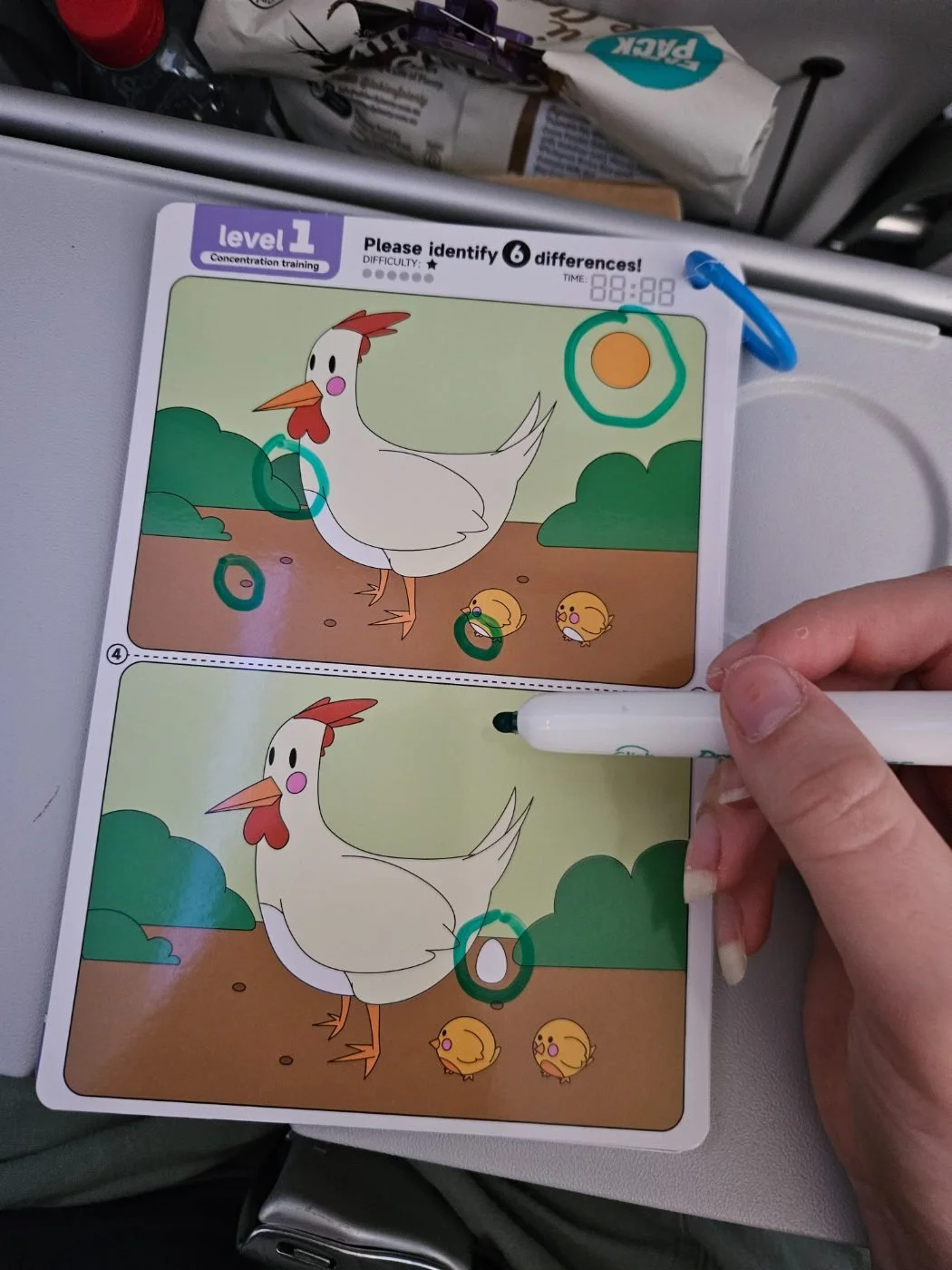
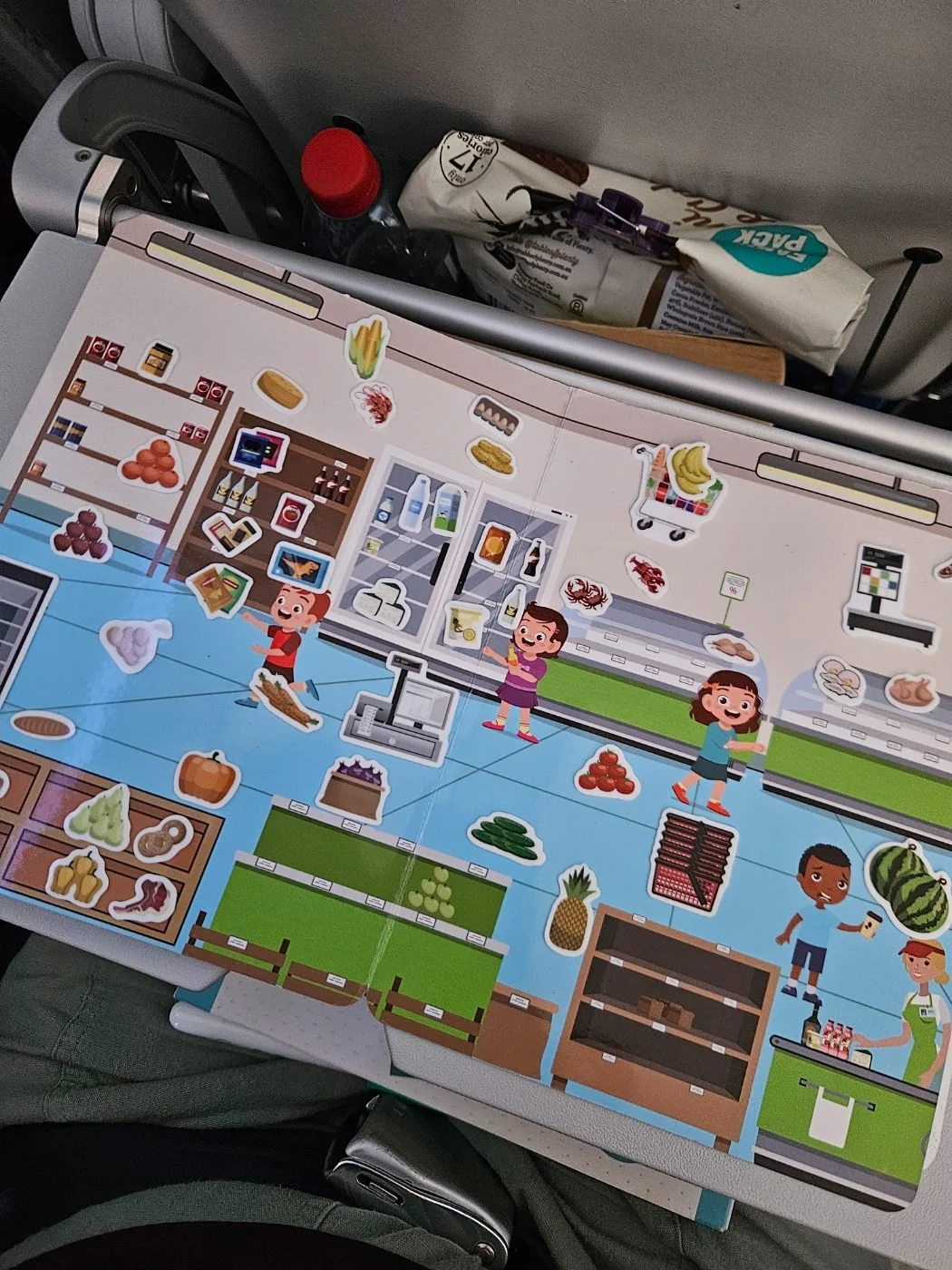
Seatbelts go back on and the tray table goes up, so pick something that works on a lap. Stickers, spot-the-difference cards or a book. Have a drink or snack within reach for landing too. The last part of the descent is often when ears hurt most.
What to pack for a flight with a 3 to 6 year old
Aim for six to eight kinds of activity for a four hour flight. Mix the familiar with a couple of things they haven't seen before.
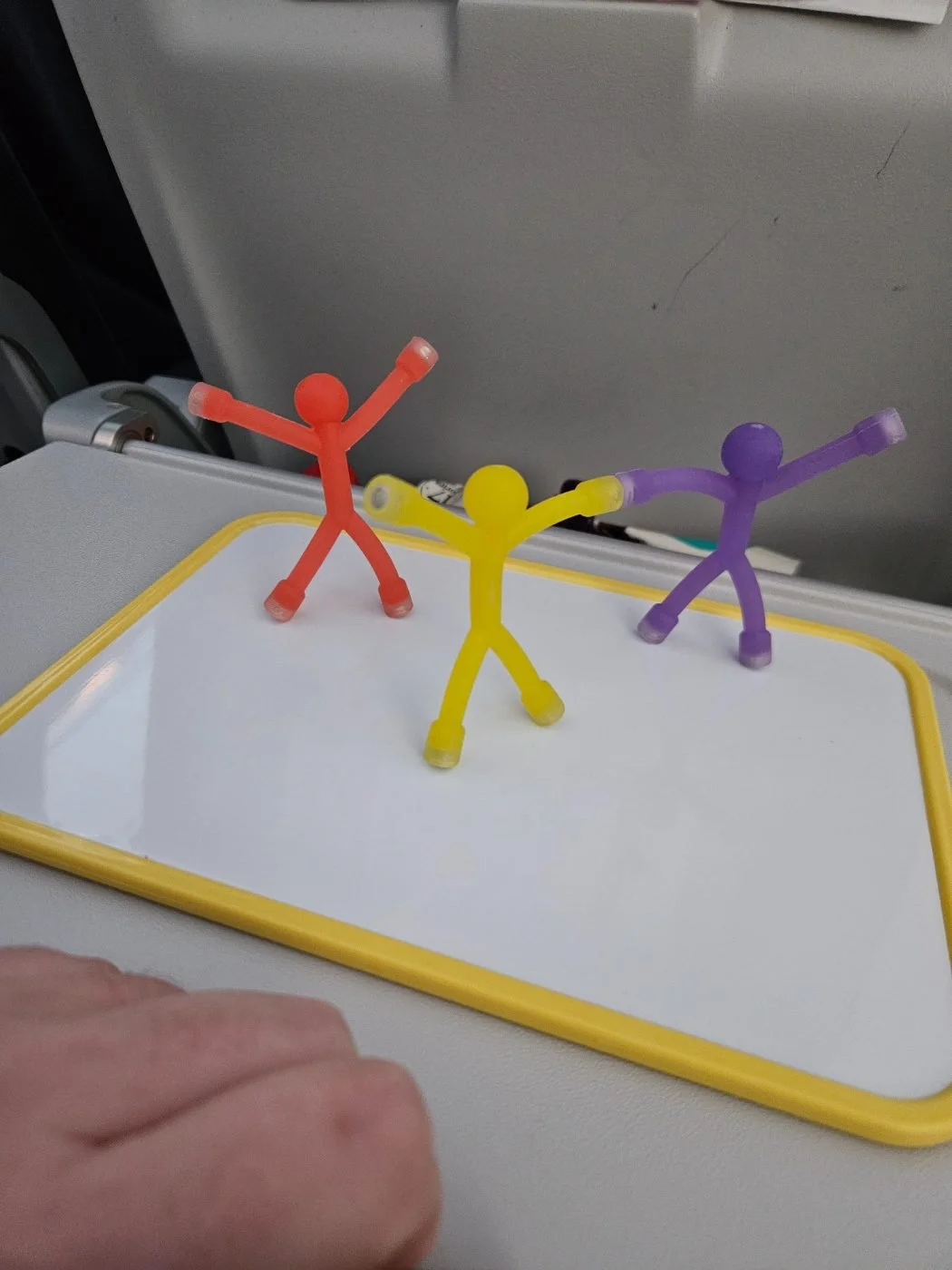
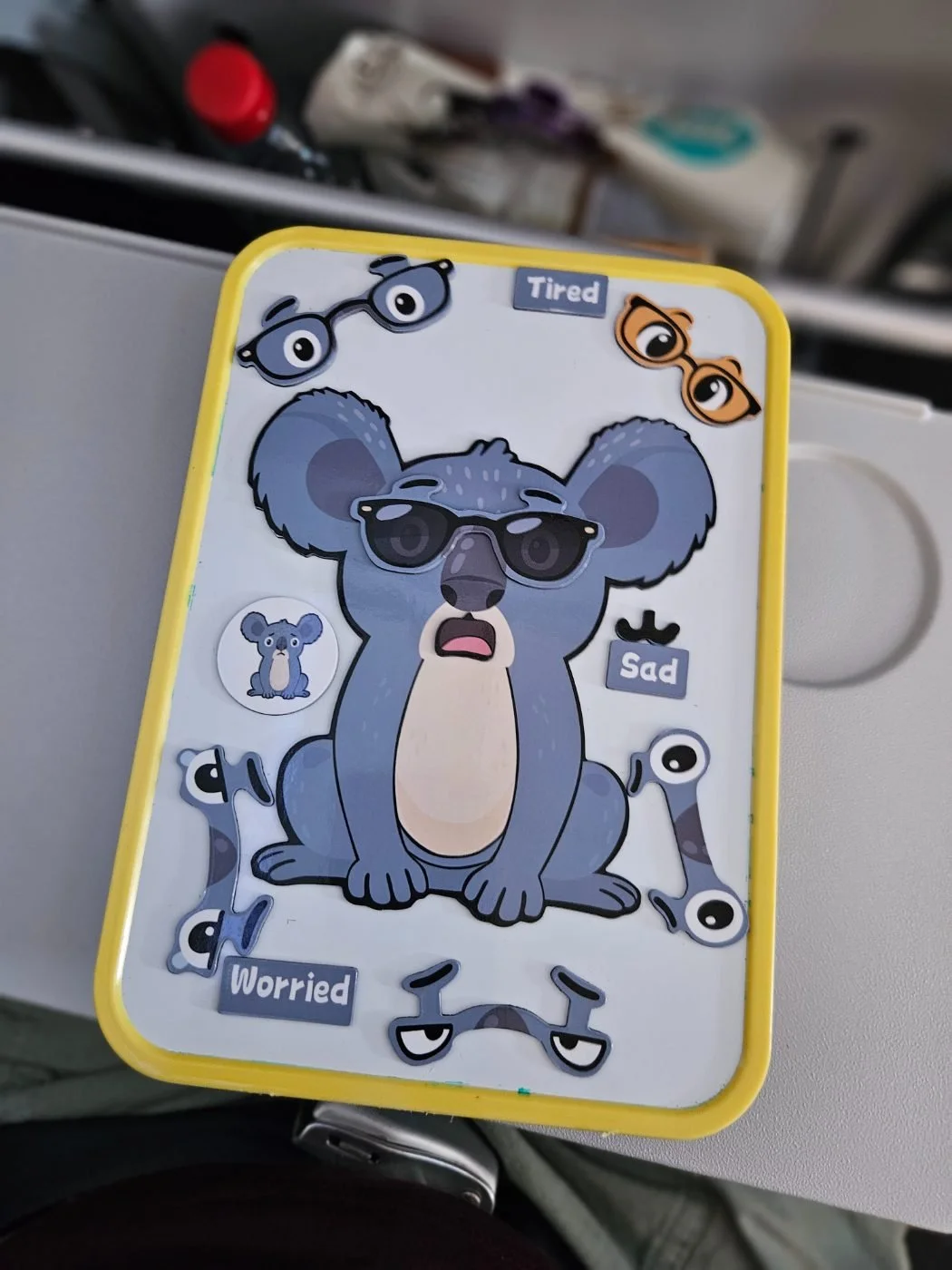
Keep something new up your sleeve
New things grab attention, a bit like toys on Christmas morning. There's research behind this. A brain imaging study found that new things switch on the brain's reward system, the part that runs on dopamine. In a follow-up memory test, people remembered better when new things were mixed in with familiar ones (Bunzeck and Düzel, 2006). That study was in adults, but it fits what I see with kids every day.
You don't need to buy a pile of new toys. If you rotate toys at home, pull out something that's been put away for a few weeks, or something that's never been opened.
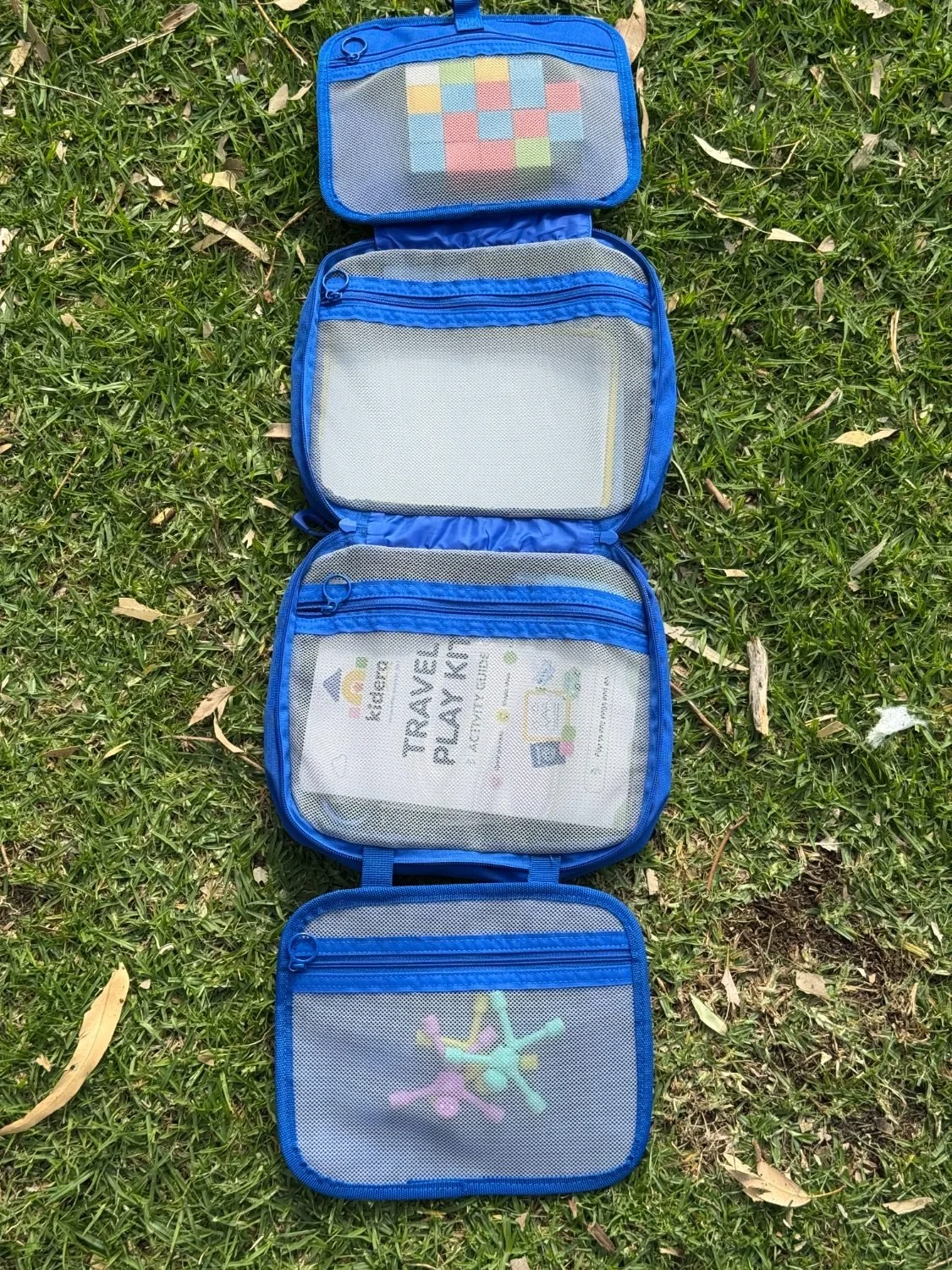
I tell parents who buy my kit to keep it packed away and only bring it out when you travel. That way it still feels new on the plane, and they haven't already had enough of it at home.
Pack more snacks and drinks than you think
Food and drink matter as much as anything in the activity bag. A hungry or thirsty child finds it much harder to settle, and the air in a plane cabin is dry. Pack plenty of water and snacks in small containers they can open themselves. Opening them is an activity in its own right.
They help with ears too. Young children have narrow Eustachian tubes (the tubes that balance the pressure in the ear), and little ones usually don't know how to pop their ears on purpose. That can make the pressure change painful, especially in the last part of the descent.
Swallowing helps the ears adjust, so offer a drink or a snack during take-off. Then do it again on the way down: keep a drink or snack ready from the start of the descent through to landing, because that's when the pressure change is often hardest. Try to keep them awake for landing too, because we swallow less when we sleep (KidsHealth).
If your child has a cold or an ear infection, check with your GP before you fly.
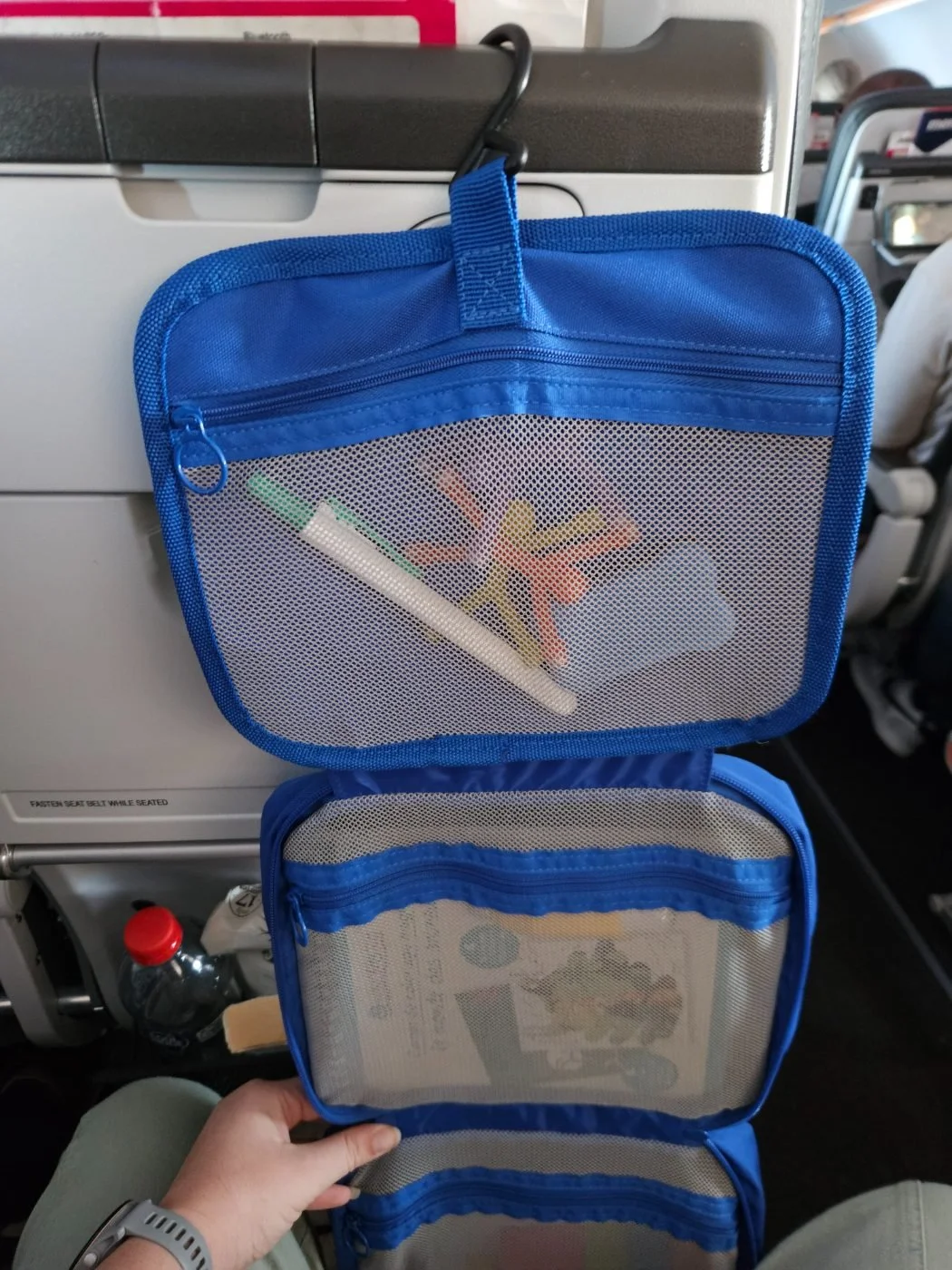
Tray table tips
Tray tables are small and plastic, so magnets won't stick to them. Bring a board for magnet pieces to stick to. If you can, hang the bag at your child's eye level over the tray table latch so they can see what's inside and choose for themselves. It saves you digging through a backpack at your feet.
Are screens okay on a plane?
Yes. I'm not anti-screen at all, and I don't judge any parent for using one. The Australian guidelines do suggest keeping screen time limited for little ones, but there's a time and place, and sometimes you do what you have to do.
What I'd say is that a screen on its own isn't always the answer. Some of the kids I work with get bored of a screen too. They need to move, or do something with their hands, or switch things up. So I'd treat it as one part of a bigger toolkit. Save it for when you need it most, often the last hour, and start with hands-on activities so you have something left for later.
What if it falls apart anyway?
It will, at some point, on most flights.
A child who has moved their body for five minutes will often go back to an activity they gave up on.
If you've read this far before your trip, you're already doing a great job. It shows you're curious, you're thoughtful, and you care about how your child will find the flight. I hope you head to the airport feeling prepared and a bit more confident.
Questions parents ask
How many activities should I pack for a four hour flight?+
Six to eight different kinds is plenty. Rotate them, and expect each one to hold attention for somewhere between 10 and 30 minutes.
Should I bring new toys for a flight?+
A couple of new-to-them things help, saved for the hardest stretch. Pack familiar favourites too. Things that have been put away for a few weeks often feel new again.
What toys aren't good on a plane?+
Anything noisy, anything with lots of small loose parts, and anything that rolls.
How do I help with ear pressure on take-off and landing?+
Something to drink or eat during take-off can help, and again through the descent and landing, which is often the harder part for ears. Ask your GP if your child has ear problems or a cold before flying.
Keep reading
These are general, evidence-informed strategies. They're not a diagnosis and not a substitute for assessment by a registered health practitioner.
Sources +
- Ruff and Lawson, Development of sustained, focused attention in young children during free play, Developmental Psychology, 1990
- Study of 93 three year olds on child-chosen and adult-chosen toys, Early Childhood Education Journal, 2025
- Bunzeck and Düzel, Absolute coding of stimulus novelty in the human substantia nigra/VTA, Neuron, 2006
- KidsHealth, Flying and your child's ears

Paediatric OT with nearly nine years of experience working with children and families. Kidera exists to make OT-informed tools accessible to every parent, not just those in clinic.

Brittany is a paediatric occupational therapist who has been registered with AHPRA for nearly nine years, working with kids and their families across homes, schools and her own clinic in Perth.
Through Kidera she shares her toy picks alongside OT tips for supporting children through play, skill development and goals, drawing on her professional experience and her own opinion. The aim is a community where parents feel supported and confident navigating raising kids, and where other professionals can pick up something useful too.